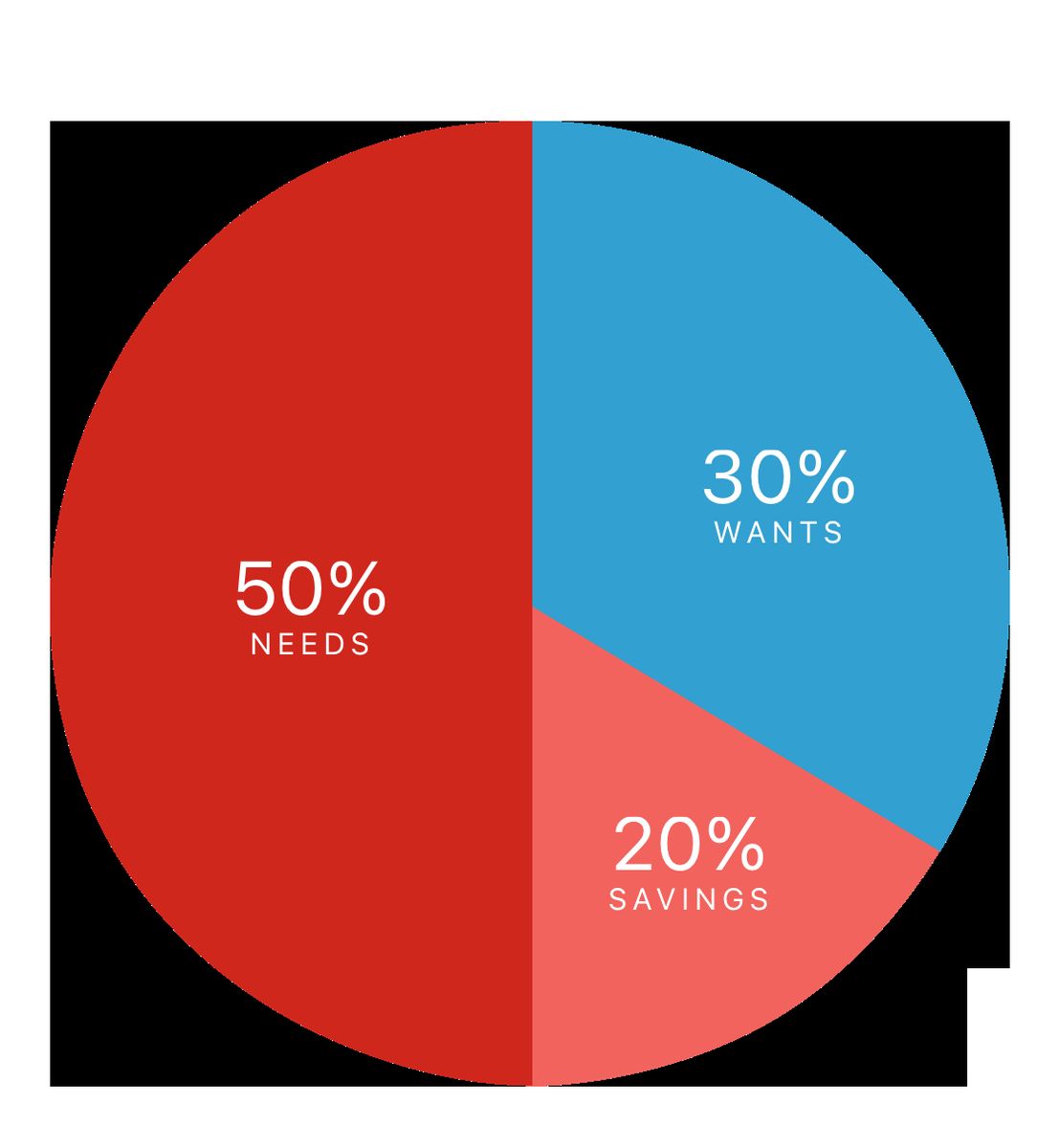
The 50/30/20 rule says you should spend 50% of your income on needs, 30% on wants, and 20% on savings and debt. It is elegant. It is simple. It is also completely unrealistic for anyone living in Denver in 2026. I have the bank statements to prove it.
Last month, a couple sat down with me in my home office on Berkeley. Combined income: $5,200 a month after taxes. Decent money. Not wealthy, but solid. Their rent in Capitol Hill? $2,150. That is 41% of their take-home pay right there. Add car insurance, groceries, utilities, phone bills, and minimum student loan payments, and their "needs" category hit 68% of their income. Not 50%. Sixty-eight.
They looked at me like I had just told them gravity was optional. "But every article says 50%," the wife said. I nodded. Every article does say 50%. Every article was also written by someone who does not live here. The national average rent is $1,962. Denver's average rent is $1,884 according to Zillow, but that number includes studios in Athmar Park and one-bedrooms in Mar Lee. Try finding a two-bedroom for a family anywhere near decent schools for under $2,000. You cannot. The RentCafe data puts the average closer to $2,224, and downtown units run $2,413 for a one-bedroom.
So what do you do when the math does not work? You adapt. You do not throw out the framework entirely, but you adjust the percentages to match reality. For Denver, I tell most of my clients to aim for 60/20/20. Sixty percent for needs, twenty for wants, twenty for savings and debt. Some families need 65/15/20. Single people with roommates might get away with 55/25/20. The point is flexibility, not dogma.
Here is the part that makes me quietly angry. The 50/30/20 rule was popularized by Elizabeth Warren in a book published in 2005. The median home price in Denver that year was $225,000. Today it is $533,060. Rent has more than doubled. Wages have not. Pretending the same percentages work is not just naive. It is harmful. It makes people feel like failures when they are actually doing fine under impossible conditions.
⚖️
50/30/20 Calculator
Split your income into needs, wants, and savings with this classic framework.
All data stays in your browser — we never see it.
Let me show you what a realistic Denver budget looks like. I will use a single person making $4,200 a month after taxes, which is roughly $65,000 a year gross. That is a decent salary for Denver, maybe a mid-level admin job or an entry-level tech role.
Needs at 60% equals $2,520. Rent for a one-bedroom in a decent neighborhood runs $1,700 to $1,900. Let us call it $1,800. Groceries for one person in Denver, if you are not eating ramen every night, is about $380. Utilities average $175. Phone and internet, $120. Car insurance, $140. Gas, $120. That is $2,735. Already over the 60% mark, and we have not even included health insurance premiums or minimum debt payments.
This is where people give up. They look at the numbers, realize the framework is impossible, and conclude budgeting itself is pointless. That is the real damage of rigid rules. They create a false binary where either you hit the percentages or you are bad with money. Neither is true.
What I tell my clients is this: start with reality, then optimize. If your needs are eating 65%, accept it. Then look at the wants category. Can you trim $50 from dining out? Can you skip one concert this summer? Can you brew beer at home instead of hitting every brewery on the Denver Beer Trail? (I am guilty of this one. Rachel has threatened to hide my growler collection.)
The savings category is non-negotiable, even if it hurts. I do not care if it is 5%. I do not care if it is $100 a month. You need something going into an emergency fund or a retirement account. The sleep-at-night number is real. I have seen people with six-figure incomes lose sleep over a $400 car repair because they had nothing saved. I have also seen people making $3,200 a month sleep like babies because they had $3,000 stashed away. The math does not determine your peace of mind. The cushion does.
📊
Monthly Budget Calculator
Build a zero-based budget that accounts for every dollar coming in and going out.
All data stays in your browser — we never see it.
Let me talk about tools, because this is where a 50/30/20 calculator actually becomes useful. Not as a rigid rule, but as a diagnostic. Plug in your income. See where your percentages land. If your needs are at 70%, the calculator shows you the gap in black and white. Then you can make informed decisions. Maybe you need a roommate. Maybe you need to move to Lakewood. Maybe you need to ask for a raise. But at least you know.
Our monthly budget calculator takes this a step further. It lets you build a custom framework instead of forcing you into 50/30/20. You set your own percentages based on your actual life. It tracks your spending against those targets in real time. And again, all your data stays in your browser. I do not see it. Nobody does.
The emergency fund calculator is another tool I recommend alongside this. If you are in the 60/20/20 camp, that 20% savings needs a destination. Some should go to emergency funds, some to retirement, some to specific goals. The calculator helps you figure out how many months of expenses you actually need based on your job stability, family size, and risk factors. A single person with a stable job and no kids needs less than a parent of two working in retail.
I want to address the guilt for a second. If you are reading this and thinking "I should be saving more," stop. Should is a terrible word. It implies moral failure. You are not failing. You are living in a city where the cost of living is 28% to 30% above the national average, where childcare costs $1,500 to $2,800 a month, where a tank of gas and a grocery run can eat a day's wages. The system is rigged, not you.
🛡️
Emergency Fund Calculator
Calculate how many months of expenses you should stash away for emergencies.
All data stays in your browser — we never see it.
That said, there is always room to optimize. Always. I had a client last year who was spending $340 a month on subscriptions. Netflix, Hulu, Spotify, Adobe, gym, meditation app, meal kit, wine club. She used maybe three of them regularly. We canceled the rest. That is $200 a month back in her pocket. Not life-changing money, but enough to bump her savings rate from 8% to 13%. Small wins compound.
Another client, a teacher in Aurora, started meal prepping on Sundays. Nothing fancy. Rice, beans, chicken, vegetables. He cut his lunch spending from $180 a month to $40. He put the $140 difference toward his student loans. Over a year, that is $1,680. Over five years, with interest, it is closer to $9,000. One habit change.
The 50/30/20 rule is not evil. It is a starting point. But Denver is not average. Colorado is not average. Your life is not average. So stop using average advice. Build a budget that fits your actual numbers, your actual city, your actual family. Use the frameworks as guides, not commandments. And if you need help running the math, that is exactly what our calculators are for.
Here is my challenge to you. Open your bank app right now. Look at last month's spending. Calculate your actual needs percentage. Do not guess. Actually do the math. If it is over 60%, welcome to the club. If it is under 50%, teach me your ways. Either way, now you know. And knowing is the only place real budgeting starts.
FAQs
Why does the 50/30/20 rule not work in Denver?
Denver's cost of living is 28% to 30% above the national average, with rent consuming 40% or more of take-home pay for many residents. The 50% needs allocation simply does not cover reality.
What percentages should I use instead?
Try 60/20/20 for most Denver households. Single people with roommates might manage 55/25/20. Families with kids often need 65/15/20. Adjust based on your actual numbers.
Is it okay if I am only saving 5% right now?
Yes. Any savings is better than none. The goal is to start the habit and increase the percentage as your income grows or expenses shrink.
How do I know if my rent is too high?
If rent exceeds 40% of your take-home pay, it is likely too high for long-term financial health. Consider roommates, a different neighborhood, or negotiating your lease.
Can I still build wealth with adjusted percentages?
Absolutely. Consistency matters more than perfection. Saving 15% every month for ten years beats saving 30% for two years and then quitting.
Table: Denver Budget Reality Check
| Category | 50/30/20 Rule | Denver Reality | Adjusted Target |
|----------|---------------|----------------|-----------------|
| Needs | 50% | 60-65% | 60% |
| Wants | 30% | 15-20% | 20% |
| Savings/Debt | 20% | 15-20% | 20% |
| Rent (1BR median) | $1,000 | $1,884-$2,224 | $1,800+ |