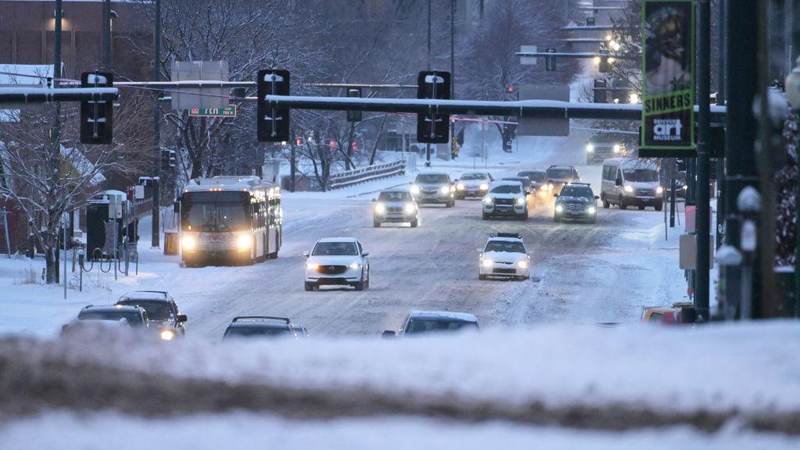
Colorado has two seasons. Winter, and construction. That is the joke, anyway. The financial reality is that Colorado has at least four distinct spending seasons, and if you do not plan for them, they will wreck your budget every single year. I have lived here long enough to know. I have also been caught off guard enough times to have developed a system.
Winter is the expensive one. Heating bills spike. Snow tires are not optional if you live in the foothills or commute on I-70. Ski passes, if you are into that, run $500 to $800 per person. Holiday spending hits in December. And the shorter days mean more electricity usage. Our winter utility bill is about $220 a month. Our summer bill is $140. That $80 difference does not sound like much until you realize it lasts five months. That is $400 a year just for heat.
Spring is the sneaky one. Tax refunds arrive, which feels like free money until you realize it was your money all along. Gardening supplies, lawn care, and home maintenance projects start. The kids need summer camp deposits. Car registration is due. Our registration for the CR-V is $280. Every April. Like clockwork. And every April, I forget about it until the reminder shows up.
Summer is the fun one. And the expensive one. Camping gear, concert tickets, road trips, higher water bills from watering the lawn, air conditioning costs, and the endless stream of outdoor activities that Denver offers. We spent $1,800 on summer activities last year. Camps, swimming pool memberships, a trip to the mountains, and one glorious weekend at Great Sand Dunes. Worth every penny. But it does not feel worth it when the credit card bill arrives in September.
Fall is the transition one. Back-to-school supplies, new clothes for growing kids, winterizing the house, and the psychological pressure to get your finances in order before the holidays. Also, football season. Which means wings, beer, and the occasional ticket to a Broncos game. Not cheap.
📊
Monthly Budget Calculator
Build a zero-based budget that accounts for every dollar coming in and going out.
All data stays in your browser — we never see it.
The solution is what I call seasonal sinking funds. Separate savings categories for each season. I set aside $100 a month for winter expenses. $80 a month for summer activities. $50 a month for spring maintenance. $40 a month for fall costs. That is $270 a month total. By the time each season arrives, the money is there. No scrambling. No credit cards. No stress.
Here is what that looks like in practice. By November, the winter fund has $500. The heating bill jumps to $220. I buy snow tires for $600. I have $900 available. Done. By May, the summer fund has $480. Summer camp deposits are $400. Pool membership is $150. I have $630 available. Done. The system works because it spreads the pain across twelve months instead of concentrating it in three.
The monthly budget calculator on our site lets you set up these seasonal categories. You can create custom categories for winter, spring, summer, and fall. Allocate monthly amounts. Track spending against each fund. See where you stand throughout the year. It turns unpredictable seasonal expenses into predictable monthly habits.
The savings goal calculator is also useful for big seasonal targets. Maybe you want $1,000 for a ski trip. Maybe you want $800 for holiday gifts. Set the goal, set the timeline, and the calculator tells you the monthly contribution. No guessing.
And the emergency fund calculator matters because seasonal expenses often overlap with actual emergencies. Your furnace dies in January. Your car needs new tires in October. Your kid breaks an arm in June. These are not seasonal. They are emergencies. And they require a separate fund. Do not confuse the two.
I also want to mention the psychological benefit of seasonal funds. There is something deeply satisfying about knowing the money for summer camp is already saved in March. It changes how you experience the season. Instead of worrying about the cost, you enjoy the activity. That is the whole point of budgeting. Not restriction. Freedom.
🛡️
Emergency Fund Calculator
Calculate how many months of expenses you should stash away for emergencies.
All data stays in your browser — we never see it.
One tip for Colorado specifically. Buy your ski gear in April, not November. End-of-season sales are 40% to 60% off. Buy your camping gear in September. Buy your winter tires in October, before the first snow when prices spike. Timing matters. A little planning saves a lot of money.
Another tip. Your utility company probably offers budget billing, which averages your annual usage into twelve equal payments. We do this with Xcel Energy. Instead of $140 in summer and $220 in winter, we pay $180 every month. It smooths the cash flow and makes budgeting easier. Check if your utility offers it.
Seasonal expenses are not surprises. They are predictable. They happen every year. The only surprise is that people are surprised by them. Stop being surprised. Start planning. Your future self, sitting by the fire in January with the heating bill already paid, will thank you.
🎯
Savings Goal Calculator
Figure out exactly how much to save each month to hit your target on time.
All data stays in your browser — we never see it.
FAQs
How much should I save for seasonal expenses?
Depends on your lifestyle, but $200 to $300 a month total covers most seasonal costs including heating, summer activities, holidays, and maintenance.
What are the most expensive seasons in Colorado?
Winter (heating, snow tires, holidays) and summer (camps, travel, activities) are typically the most expensive. Spring and fall have moderate costs.
Should I use one savings account or multiple for seasonal funds?
One account with a spreadsheet tracking the categories works fine. Some banks let you create sub-accounts or buckets for different goals.
What is budget billing for utilities?
Your utility company averages your annual usage into twelve equal monthly payments, smoothing out seasonal spikes. Most Colorado utilities offer this.
When is the best time to buy seasonal gear in Colorado?
Buy ski gear in April, camping gear in September, and winter tires in October before the first snow. End-of-season sales offer 40-60% discounts.
Table: Seasonal Budget Breakdown for Colorado Families
| Season | Typical Expenses | Monthly Savings Needed | Annual Total |
|--------|-----------------|----------------------|--------------|
| Winter | Heating, snow tires, holidays | $100 | $1,200 |
| Spring | Registration, gardening, camp deposits | $50 | $600 |
| Summer | Camps, travel, activities, higher utilities | $80 | $960 |
| Fall | Back-to-school, winterizing, football | $40 | $480 |
| Total | - | $270 | $3,240 |