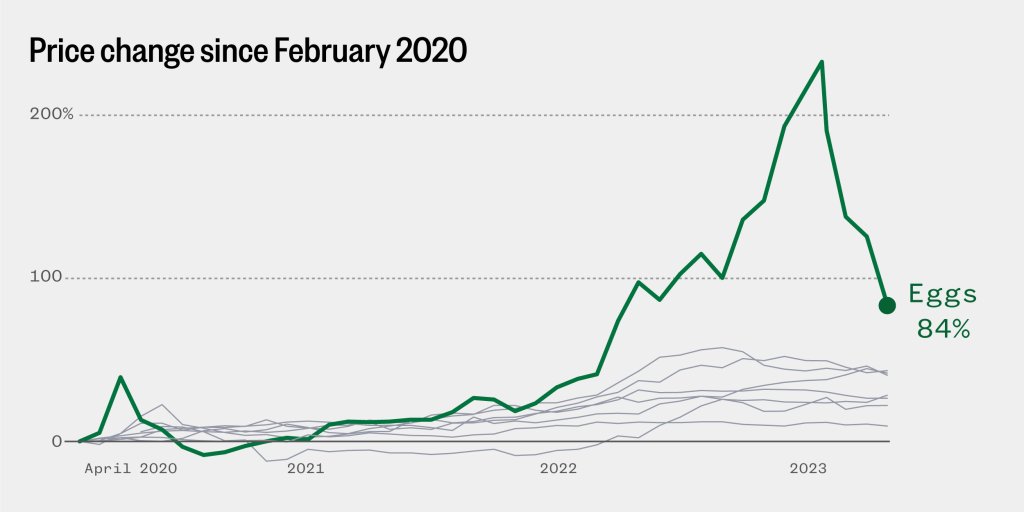
I bought the same groceries last week that I bought in January. Same store. Same brands. Same quantities. The bill was $47 higher. Forty-seven dollars. For the exact same cart. That is inflation. Not the abstract number on the news. Real money. Real impact. Real frustration.
Inflation in Denver has been running above the national average. Housing costs are 16.4% higher than the national average. Transportation and healthcare are 14.2% higher. The only category that is cheaper is food, and even that is only 2% below average, which means it is still expensive in absolute terms. A gallon of milk is $4.50. A dozen eggs is $5.49. Ground beef is $6.99 a pound. These are not luxury items. These are basics.
The insidious thing about inflation is that it does not feel like a big deal in any single purchase. You do not notice the 30-cent increase on bread. You do not notice the $2 increase on gas. You do not notice the $5 increase on your utility bill. But over a month, these increases add up to $100, $200, $300. Over a year, they add up to thousands. And if your income did not increase by the same amount, you are effectively getting a pay cut.
I had a client, a teacher in Aurora, who made $52,000 in 2023 and $54,000 in 2026. A $2,000 raise over three years. Sounds good. Except her rent went from $1,400 to $1,650. Her grocery bill went from $480 to $620. Her gas bill went from $120 to $165. Her health insurance premiums went from $180 to $240. Total increase in expenses: $595 a month. Her raise covered $167 a month. She was $428 a month worse off than three years ago. On paper, she got a raise. In reality, she got poorer.
📊
Monthly Budget Calculator
Build a zero-based budget that accounts for every dollar coming in and going out.
All data stays in your browser — we never see it.
This is happening to millions of people. And the standard advice does not help. "Cut your spending." They already cut everything they can. "Get a side hustle." They are already working fifty hours a week. "Invest in stocks." They have no money left to invest. The advice assumes there is fat to trim. For many people, there is not.
So what do you do? You fight back with specific strategies.
First, audit your fixed expenses. These are the hardest to cut but also the most impactful. Can you negotiate your rent? Can you refinance your car? Can you switch insurance providers? Can you downgrade your phone plan? Fixed expenses do not feel optional, but sometimes they are. I had a client who saved $80 a month by switching from Verizon to Mint Mobile. Same coverage. Half the price.
Second, shop strategically. Inflation hits different stores differently. The same product can vary by 30% or more between stores. I shop at King Soopers for basics, Trader Joe's for specialty items, and the Asian markets on Federal for rice, noodles, and spices. I never buy everything at one store. It takes more time. It saves real money.
Third, buy in bulk when prices are low. When chicken breasts drop to $1.99 a pound, I buy ten pounds and freeze them. When pasta is on sale for 79 cents a box, I buy twenty boxes. This requires storage space and upfront cash, but the savings are significant. Over a year, strategic bulk buying can cut your grocery bill by 15% to 20%.
Fourth, reduce energy consumption. Inflation hits utilities too. Denver winters are cold. Summer afternoons are hot. But there are ways to save. Programmable thermostats. LED bulbs. Weatherstripping. Lowering your water heater temperature. Unplugging devices when not in use. These small changes add up to $30 to $50 a month.
⚖️
50/30/20 Calculator
Split your income into needs, wants, and savings with this classic framework.
All data stays in your browser — we never see it.
Fifth, and this is the big one, increase your income. I know. Easier said than done. But in a high-inflation environment, cost-cutting has limits. Income growth does not. Ask for a raise. If you have not had one in two years, you are losing money to inflation. Switch jobs if necessary. The job market in Denver is strong. Unemployment is 3.4%. Workers have leverage. Use it.
The budget calculator with inflation on our site helps you see the long-term impact. Input your current expenses, an inflation rate, and your income growth. It shows you where you will be in one year, three years, five years. It is sobering. But it is also motivating. Because once you see the problem, you can start solving it.
The monthly budget calculator is your weapon here. Track every category. Watch for creep. When a category increases by more than inflation, investigate. Did you change brands? Did you shop at a different store? Did you simply buy more? Awareness is the first defense.
And the 50/30/20 calculator helps you see the big picture. If your needs category is creeping up because of inflation, your wants and savings get squeezed. You need to know this. You need to see it. Because pretending everything is fine is how people end up in debt.
I am not going to lie to you. Inflation is hard. It is especially hard in a city like Denver where costs were already high. But it is not unbeatable. You can fight back. You can adapt. You can win. One negotiation, one shopping trip, one thermostat adjustment at a time.
The alternative is to do nothing. To let inflation slowly erode your purchasing power until you are drowning in debt and wondering what happened. Do not let that be your story. Take control. Run the numbers. Make a plan. And remember, this too shall pass. Inflation cycles. It always has. The question is whether you will survive it intact.
🛡️
Emergency Fund Calculator
Calculate how many months of expenses you should stash away for emergencies.
All data stays in your browser — we never see it.
FAQs
How much has inflation affected Denver costs?
Denver's cost of living is 28-30% above the national average, with housing 16.4% higher and transportation/healthcare 14.2% higher than national averages.
What expenses are hit hardest by inflation?
Housing, groceries, gas, utilities, and healthcare. These are essentials that cannot be easily eliminated, making inflation especially painful.
How can I reduce my grocery bill during inflation?
Shop multiple stores, buy in bulk during sales, switch to generic brands, and use ethnic markets for staples. Strategic shopping can cut bills by 15-20%.
Should I ask for a raise to keep up with inflation?
Yes. If you have not had a raise in two years, you are effectively earning less. Denver's job market is strong with 3.4% unemployment. Workers have leverage.
How do I protect my budget from future inflation?
Build an emergency fund, increase your income, lock in fixed expenses when possible, and invest in assets that historically outpace inflation like stocks and real estate.
Table: Inflation Impact on Denver Household Budget
| Category | 2023 Cost | 2026 Cost | Increase | Annual Impact |
|----------|-----------|-----------|----------|---------------|
| Rent (1BR) | $1,650 | $1,884 | +14% | +$2,808 |
| Groceries | $480 | $620 | +29% | +$1,680 |
| Gas | $120 | $165 | +38% | +$540 |
| Utilities | $140 | $175 | +25% | +$420 |
| Insurance | $180 | $240 | +33% | +$720 |
| Total | $2,570 | $3,084 | +20% | +$6,168 |