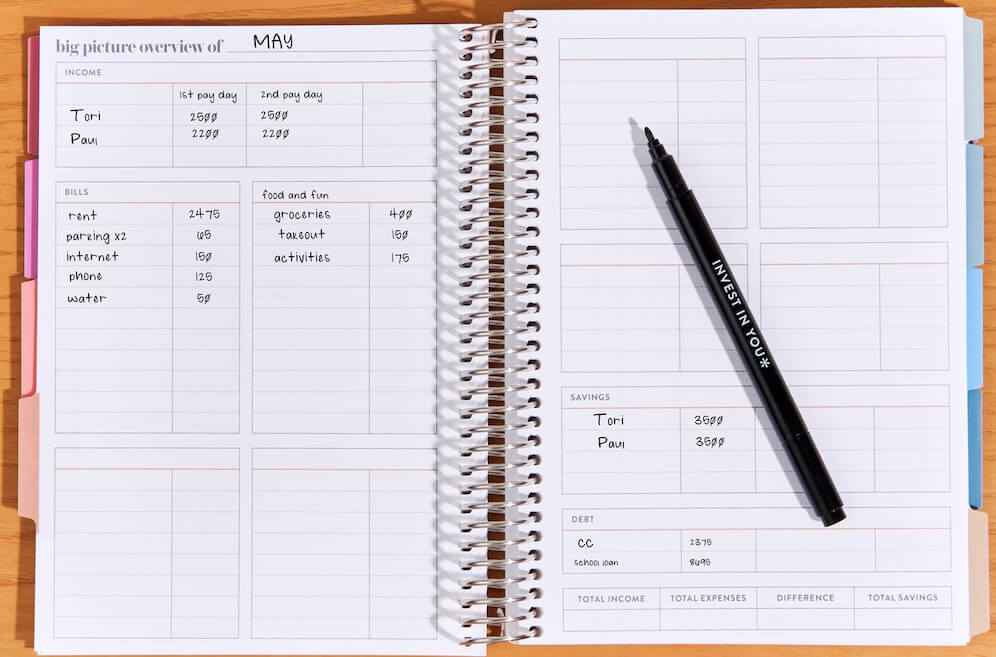
I have worked with people who have never had a budget in their entire lives. People in their forties who have no idea what they spend. People who have never logged into their bank account online. People who think a budget is something only rich people need. They are wrong. But they are not alone.
If you are starting from zero, the good news is that you cannot get worse. The bad news is that starting feels overwhelming. Where do you even begin? I am going to tell you. And I am going to make it so simple that you cannot mess it up.
Step one. Open your bank account. All of them. Checking, savings, credit cards. Look at the past three months of transactions. Do not judge them. Do not panic. Just look. You are gathering data. You are a scientist studying a subject. The subject is you.
Step two. Categorize every transaction into one of five buckets. Housing, food, transportation, debt, and everything else. That is it. Five buckets. Do not get fancy. Do not create seventeen subcategories. Five buckets. Add up each bucket. See where the money went.
Step three. Calculate your monthly take-home pay. If you get paid biweekly, multiply your paycheck by 26 and divide by 12. If your income is irregular, use your lowest month from the past year. This is your baseline.
Step four. Compare income to expenses. If you spend more than you make, you have a leak. If you spend less than you make, you have a surplus. Most people are surprised by which category is the biggest. It is rarely housing. It is usually the everything else bucket. Coffee, subscriptions, impulse buys, dining out. The small stuff that adds up to a big number.
Step five. Set one goal. Just one. Not five. Not ten. One. Maybe it is saving $500 for emergencies. Maybe it is paying off a credit card. Maybe it is just tracking spending for one month without changing anything. Pick one goal. Write it down. Put it on your fridge. Make it real.
📊
Monthly Budget Calculator
Build a zero-based budget that accounts for every dollar coming in and going out.
All data stays in your browser — we never see it.
Step six. Create your first budget. Income at the top. Essential expenses next. Rent, minimum debt payments, groceries, transportation, utilities. Then your goal. Then everything else. If the math does not work, adjust the everything else category. Not the essentials. Not the goal. The everything else.
Step seven. Track for one month. Every day. Every purchase. Use a notebook, a spreadsheet, or our monthly budget calculator. The method does not matter. The consistency matters. At the end of the month, compare actual spending to your budget. See what happened. Adjust for next month.
That is it. Seven steps. No apps required. No subscriptions. No complicated formulas. Just you, your numbers, and a little bit of discipline.
I had a client named Robert who was fifty-three and had never budgeted. He made $4,800 a month as a maintenance worker. He was always broke by the 20th. We did these seven steps. His everything else bucket was $1,400 a month. On what? He had no idea. Turns out it was $300 on lottery tickets, $250 on convenience store snacks, $200 on streaming services he forgot he had, and $650 on random Amazon purchases. He was shocked. Not angry. Shocked.
We did not cut everything. We cut the lottery to $50. We canceled the forgotten subscriptions. We set an Amazon budget of $200. We redirected $500 a month to debt payoff. In eight months, he paid off $4,000 in credit card debt. He had never felt more in control of his life.
The 50/30/20 calculator is useful here as a reference point. Not a rule. A reference. If your needs are at 80%, you know you are in survival mode. If they are at 50%, you have room to breathe. The calculator shows you the framework. You decide what to do with it.
⚖️
50/30/20 Calculator
Split your income into needs, wants, and savings with this classic framework.
All data stays in your browser — we never see it.
The emergency fund calculator matters because starting from zero means you have no cushion. One flat tire. One dental bill. One missed shift. And you are in crisis. Even $500 in savings changes the game. It is the difference between an inconvenience and a disaster.
And the savings goal calculator helps you turn vague dreams into concrete plans. Want to save $5,000? The calculator tells you exactly how much per month based on your timeline. No guessing. No hoping. Just math.
One last thing. Do not aim for perfection. Aim for progress. Your first budget will be wrong. Your second will be better. By month six, you will wonder how you ever lived without one. Budgeting is a skill. Skills take practice. Give yourself grace. Keep going. You have got this.
🛡️
Emergency Fund Calculator
Calculate how many months of expenses you should stash away for emergencies.
All data stays in your browser — we never see it.
FAQs
How do I start budgeting if I have never done it before?
Look at three months of bank transactions. Categorize them into five buckets. Compare to your income. Set one goal. Create a simple budget. Track for one month and adjust.
What if I spend more than I earn?
You have a leak. Usually in the "everything else" category. Track every purchase for one month to find it. Then cut or reduce the biggest unnecessary expenses.
Do I need an app to budget?
No. A notebook or spreadsheet works perfectly. The best budgeting tool is the one you will actually use consistently.
What should my first budgeting goal be?
A $500 emergency fund is a great starting point. It covers small surprises without requiring credit cards. After that, focus on high-interest debt.
How long does it take to get good at budgeting?
About three to six months of consistent tracking and adjusting. By month six, most people feel confident and in control of their finances.
Table: First Budget Template
| Category | Amount | Type |
|----------|--------|------|
| Take-home income | $3,800 | Income |
| Rent | $1,400 | Essential |
| Groceries | $400 | Essential |
| Transportation | $300 | Essential |
| Utilities | $180 | Essential |
| Minimum debt payments | $250 | Essential |
| Emergency fund goal | $200 | Goal |
| Everything else | $870 | Flexible |
| Total expenses | $3,600 | - |
| Remaining | $200 | Buffer |