The Psychology of Impulse Spending in a High-Cost City
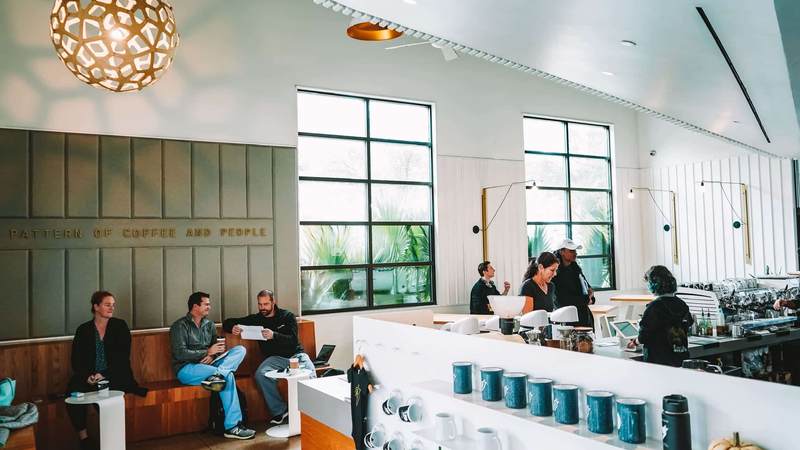
I bought a $7 coffee yesterday. I didn't need it. I wasn't even thirsty. I just felt tired and frustrated and wanted one nice thing in a city that keeps taking nice things away. That's the psychology of impulse spending in a high-cost city. You're already stressed about rent. You're already cutting back. So you give yourself permission to spend $7 on coffee because it feels like the only joy you can afford.
I see this with my clients all the time. The more they try to restrict, the more they rebel against their own budgets. Then they feel guilty. Then they restrict harder. Then they rebel again. It's a cycle. And it's not a willpower problem. It's a design problem. Restriction budgets don't work for most people because humans aren't robots. We need flexibility and forgiveness.
The Cycle of Deprivation and Binge
Let me describe what I see in my office, week after week:
A client sets a strict budget: no eating out, no coffee, no new clothes, no streaming. They stick to it for two weeks. They feel proud. Then something stressful happens: rent increase, car repair, bad day at work, an email from the landlord. They say "screw it" and order $50 of takeout, buy a $30 sweater, and sign up for a streaming service. They feel guilty. They say "I'm so bad with money." They double down on restriction. The cycle repeats.
This is not a willpower problem. It's a design problem. Restriction budgets don't work for most people because humans aren't robots. We need flexibility and forgiveness. And in a city like Denver, where the cost of living is 12% above the national average and the TABOR refund just dropped to $62, the stress is constant. The pressure is real. And the impulse to buy something—anything—that feels good is a natural response to an environment that feels hostile.
I bought a $7 coffee yesterday. I didn't need it. I wasn't even thirsty. I just felt tired and frustrated and wanted one nice thing. And you know what? I'm not sorry. Because I have a line item in my budget for "impulse spending." It's $60 a month. That coffee was part of the plan. And because it was part of the plan, I didn't feel guilty. I didn't binge. I just had a coffee and moved on.
The "Diet" Analogy Nobody Wants to Hear
Budgeting is like dieting. If you cut out all sugar, you'll eventually binge on a whole cake. If you cut out all dining out, you'll eventually blow $200 on a steak dinner. The key is moderation, not elimination. I tell my clients: put a line item in your budget for "fun money" or "impulse spending." Start with $50 a month. That's not much, but it's permission to buy that coffee guilt-free. When you have permission, the urge to binge often disappears.
I had a client in RiNo—Meghan, not my wife, different Meghan—who was spending $200 a month on takeout and coffee. She was ashamed. She tried to cut it to $0. She failed every time. I told her: increase your takeout budget to $100. Make it official. Put it in the budget. Don't feel guilty. She did. Her spending actually dropped from $200 to $100 because she stopped bingeing. She saved $100 a month and felt less stressed. Win-win.
Actually, that's not quite right. Her spending dropped to $100 for two months. Then it crept back to $140. Because life is messy and budgets are living documents. We adjusted. We bumped the line item to $120. She stabilized. The point isn't perfection. It's iteration. It's finding the number that works for your actual life, not your ideal one.
Why High-Cost Cities Trigger More Impulse Spending
There's a paradox: when your fixed costs are high—rent, utilities, childcare—you feel more financial pressure. That pressure creates stress. Stress makes you want to soothe yourself with small purchases. But those small purchases add up. And then you feel even more financial pressure.
It's a trap. The solution isn't to eliminate all small purchases. It's to allocate a small amount for them intentionally. I call it the "pressure valve." If you don't have one, the boiler explodes. If you do, the system runs smoothly.
Denver is expensive. Rent is high. Childcare is higher. And the impulse to spend is everywhere—breweries on every corner, food halls, pop-up markets, the constant siren song of "treat yourself" because you deserve it. And maybe you do. But treating yourself without a plan is how you end up with $8,000 in credit card debt and a closet full of clothes you don't wear.
I see this with my clients who work downtown. They walk past five coffee shops on the way to the office. They walk past three food halls at lunch. They walk past a brewery on the way home. The friction is zero. The spending is automatic. And by the end of the month, they've spent $400 on things they don't remember buying.
Practical Tips to Reduce Impulse Spending (Without Deprivation)
Use the 24-hour rule. For any non-essential purchase over $20, wait 24 hours. Most urges pass. I use this for vinyl records. I see a limited pressing at Twist & Shout, I want it immediately, I wait a day. If I still want it, I buy it. If I don't, I saved $35. The 24-hour rule isn't about denial. It's about clarity.
Unsubscribe from marketing emails. Those "20% off today" emails create false urgency. Get rid of them. I had a client in LoDo who unsubscribed from 47 marketing lists in one afternoon. She said it felt like decluttering her brain. She was right.
Delete shopping apps from your phone. Make it slightly harder to buy things. The friction helps. I deleted Amazon from my phone two years ago. I still buy things. But I do it on my laptop, where I have to log in, where I see the total, where I'm less likely to buy a $12 gadget at 11 PM because I'm bored.
Use cash for fun spending. Withdraw $60 in cash at the start of the week. When it's gone, it's gone. There's something visceral about handing over a $20 bill that swiping a card doesn't replicate. I don't know why. I just know it works. My client in Stapleton tried this and cut her impulse spending by 40% in a month.
Track your spending for one month. Not to judge. Just to see. You'll often curb impulses just by being aware. I did this in January. I spent $340 on "miscellaneous." I didn't know what miscellaneous was. So I categorized it. Coffee, apps, parking, convenience store snacks, a book I bought and never read. Just seeing it made me stop. Not all of it. But enough.
The Guilt Spiral (And How to Escape)
If you do overspend, don't spiral. Guilt doesn't help. Instead, ask: "What triggered this? What can I learn? How can I adjust my budget for next month?"
I once spent $300 on vinyl records I didn't need. I felt like a hypocrite. I'm a financial counselor. I should know better. Then I realized: I was stressed about a family issue. The spending was a symptom, not the problem. I fixed the underlying stress, and my spending returned to normal. The budget wasn't broken. I was.
That's the thing nobody tells you. Budgets aren't about money. They're about emotions. About stress and boredom and loneliness and the thousand tiny feelings that make us reach for our wallets. If you don't address the feelings, the budget won't stick. It's like putting a bandage on a broken leg. It might cover the wound, but it won't fix the bone.
Cooper, my labrador, doesn't have impulse control. He sees a squirrel, he chases it. He sees food, he eats it. He's a creature of pure desire. And honestly? Sometimes I envy him. But I'm not a dog. I'm a human in a high-cost city with a mortgage and two kids and a budget that needs to work. So I build in pressure valves. I forgive myself when I slip. And I keep going.
FAQ
Why do I spend more when I'm trying to save?
Because restriction triggers rebellion. When you tell yourself you can't have something, you want it more. It's called reactance. The solution isn't more willpower—it's a budget that includes some flexibility. Give yourself permission to spend a small amount on fun, and the urge to binge often disappears.
How much "fun money" should I budget in a high-cost city?
In Denver, I recommend 5–10% of your take-home pay for discretionary spending. If you make $4,000 a month after taxes, that's $200–$400. It sounds like a lot. But if you don't allocate it, you'll spend it anyway—and feel guilty. Better to plan it than to hide it.
Is impulse spending always bad?
No. Small pleasures matter. The $7 coffee that gets you through a hard day. The $20 book that changes your perspective. The $40 concert ticket that gives you a memory. These aren't wastes. They're investments in your mental health. The problem is unplanned, unconscious spending that adds up to $400 a month and leaves you wondering where it went.
How do I stop emotional spending without therapy?
Start with awareness. When you feel the urge to buy something, pause and name the emotion. Are you bored? Stressed? Lonely? Tired? Most impulse spending is an attempt to fix a feeling, not acquire a thing. If you can name the feeling, you can address it differently—call a friend, take a walk, make tea. I do this with vinyl. When I want to buy a record, I ask: "Do I want the music, or do I want the feeling of finding something rare?" Usually, it's the feeling. So I go to a thrift store and hunt. Same dopamine. Less money.
Should I use a budgeting app to stop impulse spending?
Apps help, but they're not magic. The best app is the one you'll actually use. I prefer manual tracking for impulse spending because the act of writing it down creates friction. Apps that sync automatically can make spending feel invisible. Try both. See which one makes you more aware. Awareness is the only thing that actually changes behavior.
— Marcus Thompson, from a basement office where the coffee is budgeted and the vinyl is not.