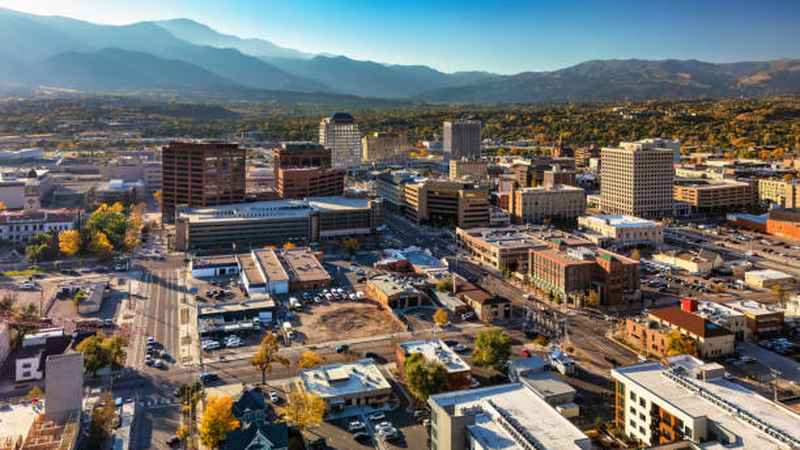
Should You Move to Colorado Springs to Save Money?
Denver is eating your paycheck. Colorado Springs is 70 miles south. Your rent would drop by $400 a month. But your commute would add 15 hours a week. Is it worth it? I've had this conversation with 40 clients in the last year. The answer is: it depends on who you are, what you do, and how much you hate I-25 traffic. Let's do the math.
I know, I know. Moving sounds like a magic bullet. Lower rent, lower insurance, closer to the mountains. But I've watched people make this move and save nothing. I've watched others make it and transform their finances. The difference isn't the city. It's the math of their specific life.
The Remote Worker Who Won
Sarah, 31, graphic designer. She worked remotely for a company in San Francisco. Her Denver rent hit $1,800 for a one-bedroom in Capitol Hill. She was miserable. "I barely left my apartment," she told me. "What's the point of paying city prices if I'm not using the city?"
She moved to Colorado Springs in May 2025. Found a two-bedroom for $1,400. Her rent dropped by $400 a month. Her car insurance dropped by $30. Her groceries stayed about the same. Her internet was actually faster for $10 less. She saved $500 a month instantly. That's $6,000 a year. She put it all into her Roth IRA.
She also started hiking more. She joined a climbing gym. She made friends. She's happier than she was in Denver. For remote workers with no commute to Denver, the Springs can be a huge win. The arbitrage is real: Denver income, Springs cost of living.
But here's the thing. Sarah's job was stable. She'd been remote for three years. Her company didn't care where she lived. If you're in a hybrid role—or if your employer is considering a return-to-office policy—moving to the Springs is a gamble. A $400 rent savings doesn't matter if you lose your job.
The Commuter Who Lost
Mike, 38, construction project manager. His job site rotated, but his home base was downtown Denver. He thought moving to the Springs would save him money. He found a house for $425,000. Similar house in Denver would have been $575,000. He jumped at it.
Then the commute started. Every day: 1 hour 15 minutes each way. Sometimes longer. He was spending $400 a month on gas. His car needed oil changes every 6 weeks. He was exhausted. "I was getting home at 7 PM," he said. "I'd eat dinner, watch one show, and go to bed. I didn't see my kids. My marriage got tense."
After eight months, he sold the house (made a small profit) and moved back to Denver, renting a townhouse in Stapleton. His housing costs went back up, but his gas bill dropped by $300 and his sanity returned. "I calculated that the commute cost me about $6,000 a year in gas, wear and tear, and my time. I valued my time at $30 an hour. That's another $12,000. So the 'savings' disappeared."
Mike's story is the one I tell most often. Because it looks like math on paper. Lower rent. Lower house price. But the hidden costs—time, gas, maintenance, mental health—are real. And they're expensive.
The Couple Who Split the Difference
Jenna and Carlos, both 29. Jenna worked remotely for a tech startup. Carlos had a hybrid job in Denver—two days in office, three at home. They considered moving to the Springs but realized Carlos's commute would be brutal two days a week. Instead, they moved to Castle Rock—about halfway between Denver and the Springs.
Castle Rock rent: $1,650 for a two-bedroom. Not as cheap as Springs, but cheaper than Denver ($2,300). Carlos's commute: 35 minutes to Denver on office days. Jenna's remote work unchanged. They saved about $600 a month compared to Denver. Carlos's gas bill went up by $100, but they still netted $500 savings. That's $6,000 a year.
They're happy with the compromise. They still go to Denver for concerts and restaurants on weekends. They enjoy the quieter town during the week. For hybrid workers, a halfway point like Castle Rock or Parker might offer the best balance. You get some savings without the soul-crushing commute.
The Real Numbers: A Hypothetical Breakdown
Let's run the numbers for a hypothetical person earning $70,000 a year in Denver, with a fully remote job that lets them live anywhere in Colorado.
In Denver, take-home pay (after taxes, 5% 401k, health insurance): about $4,200/month. Average one-bedroom rent: $1,800. That's 43% of take-home pay. In Colorado Springs, take-home pay is the same. Average one-bedroom rent: $1,496. That's 36% of take-home pay. That's 7 percentage points less. On $4,200/month, that's $300 more in your pocket each month.
Over a year: $3,600. Over five years: $18,000. That's real money. But you lose access to Denver's job market. If you ever lose your remote job, you'll be searching in a smaller market with lower wages. That's a risk. And risk has a cost.
Actually, that's not quite right. The Springs job market is growing. Tech companies are expanding there. The cost of living advantage is attracting remote workers. But it's still not Denver. If you're in a specialized field, the job pool is smaller. The backup plan is weaker. That's worth factoring in.
The Pros and Cons at a Glance
Colorado Springs pros: lower rent, lower traffic, closer to nature, friendlier for families, lower car insurance, slower pace. Colorado Springs cons: fewer high-paying jobs, longer commute to Denver, fewer cultural amenities (concerts, museums, pro sports), lower walkability, more conservative politics (if that matters to you).
Denver pros: more jobs, higher wages, better public transit, more amenities, younger vibe, better airport access. Denver cons: higher rent, worse traffic, more crime in some areas, higher car insurance, more crowded.
There's no right answer. There's only your answer. And your answer depends on your job, your family, your priorities, and your tolerance for commuting on I-25—which, in my experience, is the closest thing to purgatory on earth.
My Honest Take
If you have a remote job that pays Denver wages, the Springs is a no-brainer. You get Denver income with lower cost of living. That's arbitrage. If you work in Denver, don't move to the Springs. The commute will eat up all your savings and then some. If you're hybrid (1-2 days in office), look at Castle Rock, Parker, or even Lone Tree. Those suburbs offer a middle ground.
And if you're renting, remember that you're not stuck. Try a 6-month lease in the Springs. If you hate it, move back. The transaction cost is a few thousand dollars. That's a small price to pay for certainty. I tell clients all the time: renting is an option, not a prison. Use it.
Cooper doesn't care where we live as long as there are squirrels. And honestly, there are more squirrels in the Springs. Maybe that's the real lesson. Find the place where your basic needs are met and your budget has room to breathe. Everything else is negotiable.
FAQ
How much cheaper is Colorado Springs than Denver really?
Housing is roughly 20–25% cheaper. A one-bedroom in Denver averages $1,800; in Springs, it's $1,400–$1,500. Groceries and utilities are similar. Car insurance is 10–15% lower. But wages are also 10–15% lower for local jobs. The math only works if you keep your Denver salary remotely.
Is the commute from Springs to Denver realistic?
No. It's 70 miles each way, and I-25 is a parking lot during rush hour. I've had clients tell me the commute takes 90 minutes to 2 hours each way. That's 15–20 hours a week in your car. Unless you have a very high salary or a very high tolerance for podcasts, the commute destroys the savings. Don't do it.
What about Castle Rock or Parker as a middle ground?
For hybrid workers, yes. Castle Rock is 30–40 minutes from Denver. Rent is $200–$400 cheaper than Denver. You get some savings without the Springs commute. The trade-off is less nightlife and fewer amenities. But if you're working from home 3 days a week, you might not care.
Should I buy in Springs or keep renting in Denver?
If you're planning to stay in Colorado long-term and you work remotely, buying in Springs can make sense. Home prices are lower, and your mortgage builds equity. But if you might need to return to Denver for work, renting gives you flexibility. I had a client buy in Springs, get a new job in Denver six months later, and lose money on the sale. Flexibility has value.
Does moving to Springs affect my social life?
Yes, and this is the hidden cost nobody talks about. You'll see your Denver friends less. You'll drive more for concerts, restaurants, and events. The social friction is real. One client told me she saved $400 a month on rent but spent $200 more on gas driving to Denver for social events. She moved back after a year. The money wasn't worth the isolation.
— Marcus Thompson, from a bungalow in Berkeley where the mountains are close and the commute is zero.